The music
Vivaldi's Four Seasons in Prague
What Vivaldi's Four Seasons is, how it is built and what to listen for, with notes on hearing it in a Baroque church concert in Prague's Old Town.
Book your seat at St Giles' ↗Quick answer
Antonio Vivaldi's Four Seasons is a set of four violin concertos, one for each season, published in 1725 in Amsterdam as part of his Op. 8. Each concerto has three movements, fast, slow, fast, and a sonnet that goes with it. The St Giles' Church concert in Prague bills the Four Seasons for some dates, so check the calendar entry for your date before booking.
Four concertos, one set
The Four Seasons are four violin concertos: Spring, Summer, Autumn and Winter. Vivaldi composed them around 1718 to 1723, while he was court chapel master in Mantua, and they were published in 1725 in Amsterdam by Michel-Charles Le Cène. They appear as the first four of twelve concertos in a collection titled Il cimento dell'armonia e dell'inventione, Op. 8. A solo violin plays against the string orchestra in all four. The Four Seasons is the best known of Vivaldi's works, and around a thousand recorded versions existed by 2011.
A sonnet for each season
Vivaldi published each concerto together with a sonnet, and the poems describe the scenes the music paints. The authorship of the sonnets is unknown, though some think Vivaldi himself wrote them. Each sonnet falls into three sections that match the three movements. Vivaldi added instructions to the score that name what he is depicting, such as the barking dog in Spring. This is programme music: a listener who follows the sonnet hears weather, birds and country life in the string writing.
How each concerto is built
Every concerto runs fast, slow, fast. Spring is in E major, Summer in G minor, Autumn in F major and Winter in F minor. A complete performance takes roughly 40 to 43 minutes, with each concerto lasting around nine to eleven minutes, so a concert of about an hour has room for the whole set or for part of it alongside other pieces. Which you hear is set by the date, and the printed programme handed out at St Giles' tells you.
What to listen for
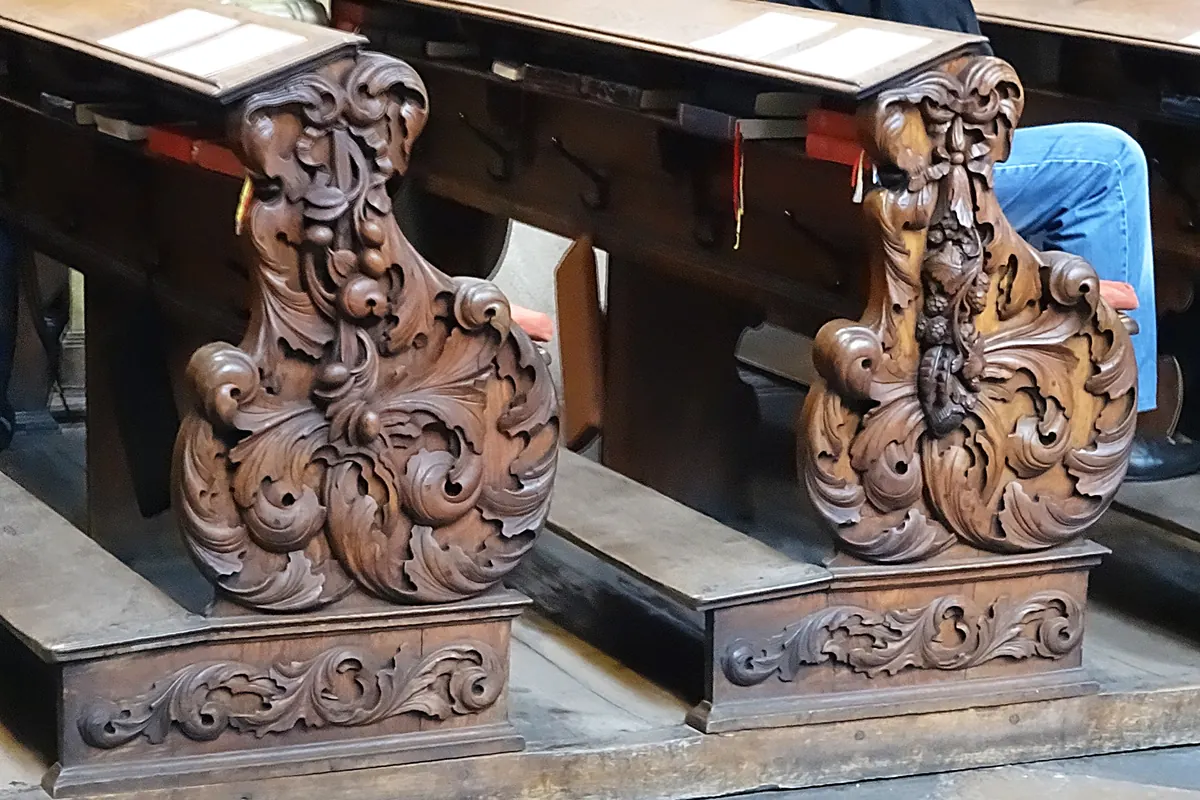
Take the sonnets as a guide, not a script. Listen for the solo violin stepping out of the ensemble, the repeated figures that sound like weather, and the slow movements where the strings go quiet. In a church, the stone and the vaults let each long note hang a moment, so the effect differs from a recording. Baroque strings in a Baroque room is the match this concert is built on.
Why you may already know it
The Four Seasons is one of the most recorded pieces of classical music. The first electrical recording was made in 1942 by Bernardino Molinari, and Nigel Kennedy's 1989 recording sold more than three million copies worldwide. The ensemble I Musici has recorded the set more often than any other established group, and Gramophone wrote in 2023 that one recent recording was potentially the most streamed interpretation ever. That familiarity is useful in a concert: you can follow the sonnets without needing the programme note, and still be surprised live.
Is it every date?
No. The booking page names the Four Seasons for some dates and other composers for others, and says the Vivaldi programme depends on the date. The calendar entry for your date shows what is billed. If the Four Seasons is your reason for going, read the entry first. If you are curious about other music, the series also names Mozart, Albinoni, Smetana and Dvořák, and an evening of Czech composers in a Czech church has its own appeal.
Frequently asked questions
When was the Four Seasons published?
In 1725 in Amsterdam, as part of Vivaldi's Op. 8.
How long is it?
A complete performance takes roughly 40 to 43 minutes. A concert may play all four concertos or part of the set.
Will the Four Seasons be played at my concert?
Only on dates that bill it. Check the calendar entry for your date.
What do the sonnets do?
They describe the scenes of each season and match the three movements of each concerto.
Sources